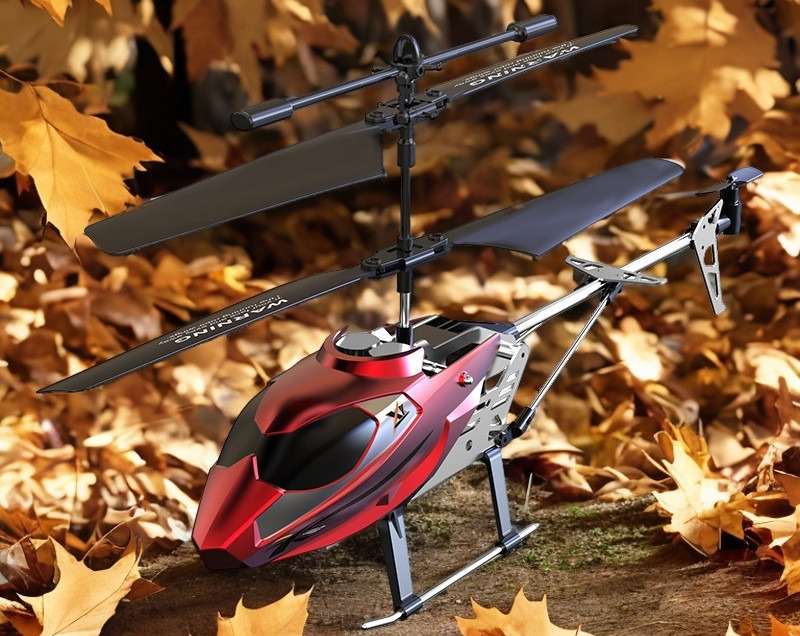
Alloy Remote Control Helicopter Model
$0 $205
Save -100%
 Security policy
 Delivery policy
 Return policy
Security policyDelivery policyReturn policyAn alloy remote control helicopter model is a remotely controlled flying model toy made of alloy and other materials, based on a real helicopter, combining technological sophistication and fun. Its description can be elaborated on from aspects such as structure, materials, functions, operating characteristics, and applicable scenarios.
Structure and Design: The fuselage is usually made of lightweight alloy or plastic materials, combined with a streamlined design, which reduces weight while ensuring sturdiness. Core components include the main propeller (generating lift), tail rotor (balancing torque and assisting steering), landing gear (absorbing takeoff and landing impacts), and built-in battery and control board. Some models also reproduce details of real helicopters, such as machine guns, missile launchers, or simulated lights, enhancing visual realism.
Material Characteristics: Alloy materials (such as zinc alloy) are often used for the fuselage shell or key components, improving durability and texture, while preventing the model from being easily damaged by minor collisions. Surface treatments often use glossy paint or fine engraving to make the model look more realistic. Flight Principles and Control System: Lift is generated by the rotation of the main propeller (based on aerodynamic principles), and the tail rotor adjusts the direction. The control system consists of a remote controller and built-in sensors (such as gyroscopes). The remote controller is operated wirelessly and supports ascent, descent, movement, and mode switching. The sensors automatically stabilize the attitude, and some high-end models integrate GPS or optical flow positioning technology for precise hovering.
Operation and Usage Scenarios: Suitable for beginners or casual riders, requiring operation in an open, windless area. After startup, slowly adjust the control stick until the aircraft is hovering smoothly before attempting to turn. Various flight modes are available (such as indoor optical flow mode or outdoor GPS mode), but different models may exhibit swaying when operating the rudder, requiring riders to adapt.
Added Value: These models not only provide enjoyment but also help understand aerodynamics and mechanical control principles, often used in teaching, demonstrations, or entertainment. During maintenance, regularly check transmission components (such as the main shaft and tail shaft) for bending to avoid affecting flight performance.
Add Related products to weekly line up
other products in the same category: